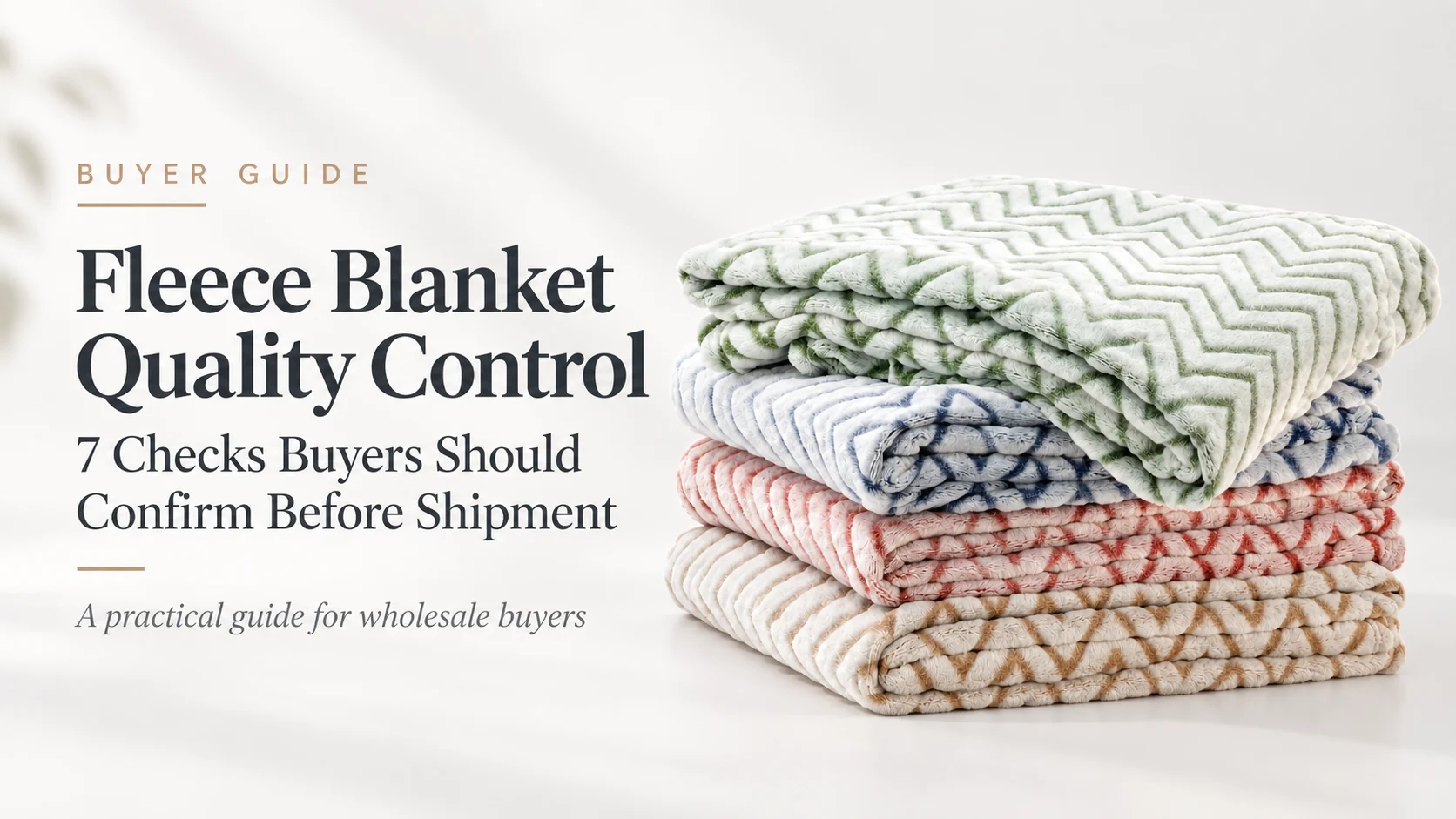
Fleece Blanket Quality Control: 7 Checks Buyers Should Confirm Before Shipment
For wholesale fleece blanket orders, quality control should not begin only when the goods are ready to ship. Buyers can reduce problems by defining the main inspection points during sampling and confirming the same standards again before shipment.
The following checks are especially useful for flannel fleece, sherpa, high-low pile and other polyester blanket programs.
1. Finished Size and Weight
Confirm the finished blanket dimensions and acceptable tolerance before production. For fleece blankets, buyers should also check the actual finished weight against the approved sample or agreed GSM.
Size, GSM and construction should be reviewed together because brushing, bonding, washing and finishing can affect the final result.
2. Color Consistency
Bulk color should be compared with the approved color standard or sample under consistent lighting conditions.
Check shade differences between production lots
Compare body fabric, binding and stitching colors
Confirm printed or dyed colors before packing
Review melange or heather effects separately when applicable
3. Surface and Pile Appearance
Fleece quality is strongly influenced by surface appearance. Buyers should check whether the pile is even and whether the fabric shows obvious crushing, streaks, bald areas or inconsistent brushing.
For high-low pile, embossed, sherpa or textured blankets, the pattern depth and surface effect should also match the approved sample.
4. Stitching and Edge Finishing
Inspect the blanket edges carefully because visible sewing defects can quickly reduce the perceived quality of the product.
Even stitch density
No skipped stitches
No loose threads
Clean corners
Consistent binding width
Correct decorative or blanket stitching
For reversible or double-layer blankets, buyers should also confirm that both layers remain aligned after sewing.
5. Basic Performance Testing
Performance requirements depend on the destination market and the buyer's own specification. Common checks may include color fastness, dimensional stability after washing, fabric strength, pilling performance and seam durability.
Testing requirements should be agreed before bulk production rather than added at the final shipping stage.
6. Labels and Product Information
Before packing, confirm that the correct labels are attached to the correct products.
Brand label
Care label
Fiber composition
Size information
Country-of-origin marking
Barcode or SKU label
For private-label blanket programs with several colors or sizes, SKU control is especially important to avoid mixed cartons.
7. Final Random Inspection
A final random inspection can be used to check finished goods before shipment. Buyers and suppliers should agree in advance on the sampling method, inspection level and how critical, major and minor defects will be handled.
Typical final inspection points include appearance, measurements, workmanship, labels, packaging, carton quantity and shipping marks.
Create the Quality Standard Before Production
The most effective blanket quality control starts with a clear approved sample and written specification. Photos, dimensions, GSM, colors, stitching details, labels and packaging requirements should all be recorded before bulk production begins.
This gives both the buyer and the manufacturer the same reference when checking the final order and makes repeat blanket programs easier to control.
Suzhou Utiful Textile supports OEM and ODM fleece blanket development, including custom materials, colors, sizes, private labels, packaging and pre-shipment quality control requirements.

